

What is Colorectal Cancer?
Colorectal cancer is a cancer that begins in the colon or rectum. It is the third leading cause of cancer related death in both men and women, but it is also one of the most preventable. Screening methods such as stool-based testing and colonoscopies can detect the disease early.
It is recommended that people ages 45 to 75 get screened regularly.
Risks & Symptoms of Colorectal Cancer
Average Risk:
All individuals ages 45–75 are considered at average risk.
High Risk:
You may be at higher risk if you:
- Have an immediate family member diagnosed with colorectal cancer
- Have had polyps removed during a past colonoscopy
- Have inflammatory bowel disease such as Crohn’s or ulcerative colitis
- Have a genetic predisposition or certain inherited syndromes
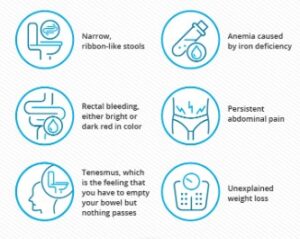
Colorectal cancer symptoms include:
- Blood in stool
- Changes in bowel patterns
- Feeling that the bowel does not empty completely after a movement
- Unexplained weight loss
- Abdominal pain
What to Expect at Kintegra Health
- If you are at average risk: Your provider may recommend a stool-based test kit, such as Cologuard or Hemosure.
- If you are at high risk or have a positive stool test: Your provider may refer you to a local specialist for a colonoscopy.
- If you are uninsured or underinsured: You may qualify for assistance with both testing and specialist referrals.
Educational Resources
Colorectal Cancer Education
- American Cancer Society – Colorectal Cancer Information
- Screening Options – English & Español (NCCRT)
How to Complete Your Stool Kit (by language)
- Hemosure/FIT Tutorial – English
- Hemosure/FIT Tutorial – Español
- Cologuard Walkthrough – Choose preferred language
Colorectal Cancer Screening Collaborations
- Colon Cancer Coalition – Colon Cancer Coalition
Contact Information
Patient Navigation / Stool-based Tests: 980-552-7056 or 980-925-3726
Patient Navigation / Uninsured Colonoscopy: 704-418-5043
Program Manager: 980-421-8489
Privacy & Cookies: This site uses cookies. By continuing to use this website, you agree to their use.
To find out more, including how to control cookies, view our Privacy Policy.
Follow us on Instagram @kintegrahealth